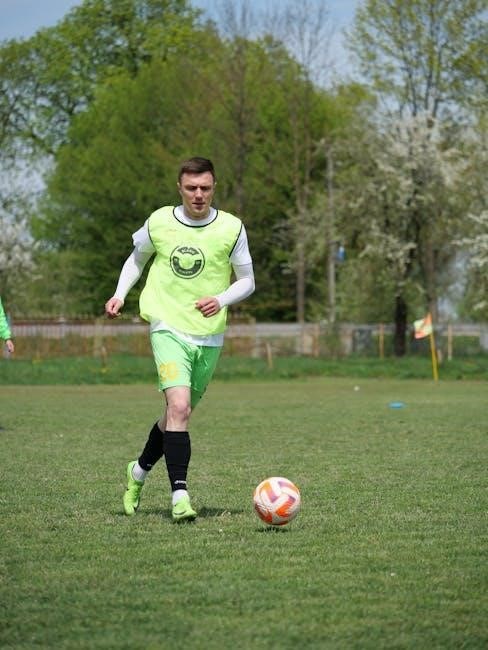
u8 soccer practice plans pdf
U8 Soccer Practice Plans: A Comprehensive Guide
Discover expertly crafted U8 soccer drills and game ideas, readily available as downloadable PDFs, to elevate young players’ skills and passion for the beautiful game.
Enhance training sessions with structured plans focusing on footwork, passing, and shooting, designed for optimal development at this crucial age group.
Understanding the U8 Age Group
U8 players (typically 7-8 years old) are at a pivotal stage of athletic and cognitive development. Their attention spans are growing, but remain relatively short, necessitating dynamic and engaging practice sessions. Focus should be on fostering a love for the game, rather than complex tactical instruction.
At this age, fundamental motor skills are still refining. Coordination, balance, and agility are key areas for improvement. Drills should prioritize individual ball control and basic movement patterns. Competition should be introduced gradually, emphasizing participation and effort over winning.
Social-emotional development is equally important. U8 players are learning to cooperate, share, and follow instructions. Practices should incorporate teamwork activities and positive reinforcement to build confidence and sportsmanship. Keep it fun, keep it simple, and keep them moving!
Key Developmental Focus Areas for U8 Players
U8 soccer training should prioritize four core developmental areas: individual technique, small-sided game understanding, physical literacy, and social-emotional growth. Technically, focus on dribbling with different parts of the foot, basic passing accuracy, and shooting form – not power.
Introduce simple tactical concepts through small-sided games (3v3, 4v4). Encourage players to find space, make simple passes, and support their teammates. Physical literacy involves developing agility, balance, coordination, and speed through fun, game-like activities.
Crucially, foster a positive team environment. Emphasize effort, sportsmanship, and respect for opponents and officials. Celebrate successes, learn from mistakes, and build a love for the game that will last a lifetime. These foundational skills are paramount.
Practice Plan Duration & Structure (60-Minute Session)
A well-structured 60-minute U8 soccer practice maximizes engagement and learning. Begin with a 10-minute warm-up, incorporating dynamic stretching and fun running games to prepare players physically and mentally. Dedicate 25 minutes to skill development drills, focusing on one or two key techniques like dribbling or passing.
The core of the session should be 20 minutes of small-sided games (3v3 or 4v4). This allows players to apply learned skills in a game-like environment. Conclude with a 5-minute cool-down, including static stretching and positive reinforcement.
Remember to keep drills short, frequent, and engaging. Minimize downtime and maximize touches on the ball. Adapt the plan based on player energy levels and skill progression.
Warm-Up Activities (10 Minutes)
A dynamic warm-up is crucial for preparing U8 players for practice, preventing injuries, and increasing focus. Start with dynamic stretching – arm circles, leg swings, and torso twists – for approximately 5 minutes. These movements improve range of motion and blood flow.
Follow this with fun running games for the remaining 5 minutes. Classic options like tag or Red Light/Green Light are excellent for building agility and listening skills. Introduce variations like dribbling while playing tag to incorporate ball control early on.
Keep the energy high and the activities lighthearted. The goal is to get players moving and excited for the session ahead, not to exhaust them before skill work begins.
Dynamic Stretching for Young Legs
Prioritize movement-based stretches over static holds for U8 players. Begin with arm circles – forward and backward – to loosen shoulder muscles. Next, incorporate leg swings, gently swinging each leg forward, backward, and side-to-side, focusing on controlled movements.
Torso twists are excellent for core activation and flexibility. Encourage players to keep their feet planted and twist gently from side to side. Include high knees and butt kicks to warm up leg muscles dynamically.
Emphasize proper form and controlled execution. Each stretch should be performed for approximately 30 seconds per leg or side. Make it fun by turning it into a game or challenge!
Fun Running Games (Tag, Red Light/Green Light)
Incorporate playful running games to elevate heart rates and prepare young athletes for skill work. Classic tag variations – like freeze tag or chain tag – encourage agility and quick changes of direction. Red Light, Green Light is fantastic for developing listening skills and controlled stopping/starting abilities.
Modify games to suit the space and number of players. Introduce soccer-specific elements, such as dribbling a ball while being “it” in tag. Emphasize safe play and awareness of surroundings.
Keep it lighthearted and focused on enjoyment. These games should be a fun way to warm up, not a source of stress or competition. Limit game duration to 5-7 minutes each.
Skill Development Drills (25 Minutes)
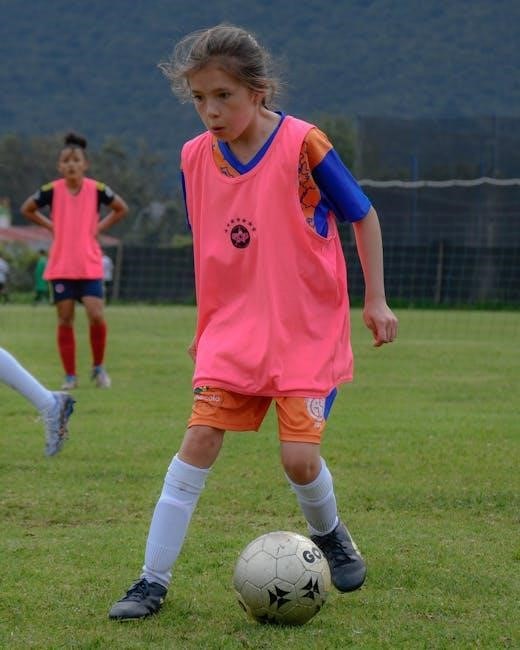
This segment focuses on foundational soccer skills through engaging drills. Begin with dribbling – cone weaving promotes ball control and agility, while simple “follow the leader” drills build confidence. Transition to passing, utilizing partner passing with increasing distances and focusing on inside-of-the-foot technique.
Introduce small passing games, like passing in a square, to encourage movement and quick decision-making. Conclude with shooting drills, emphasizing proper foot placement and aiming for a target.
Keep drill repetitions short and frequent, maintaining high energy and engagement. Provide positive reinforcement and individual feedback throughout the session.
Dribbling Drills: Cone Weaving & Ball Control
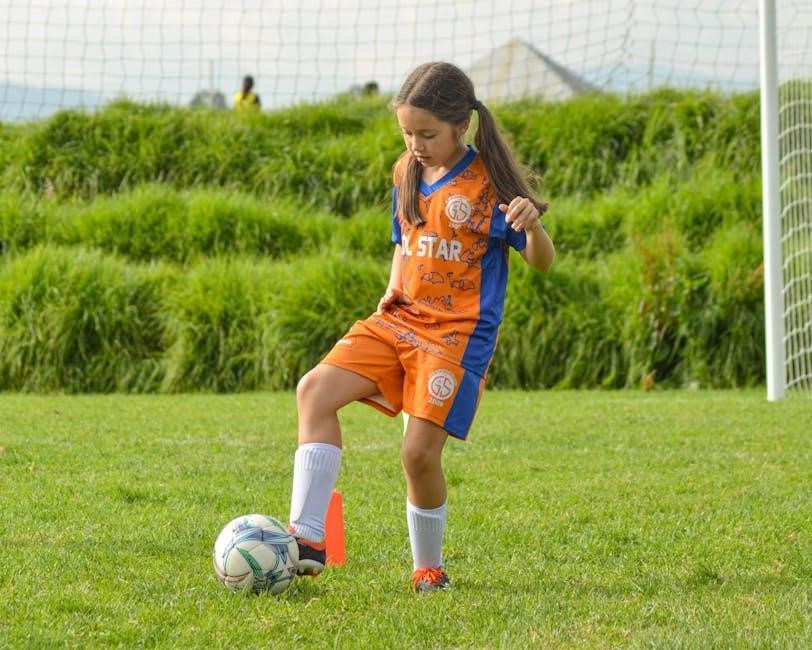
Cone weaving is excellent for developing agility and close ball control. Set up a line of cones, spaced approximately 3-5 feet apart, and have players dribble through them using both feet. Focus on small touches and keeping the ball close to avoid losing possession.
Introduce variations like dribbling with the head up, or challenging players to complete the course as quickly as possible. Ball control drills can include “toe taps” (alternating feet tapping the top of the ball) and “roll overs” (rolling the ball across the body with the sole of the foot).
Emphasize using different parts of the foot to manipulate the ball, and encourage creativity.
Passing Drills: Partner Passing & Short Passing Games
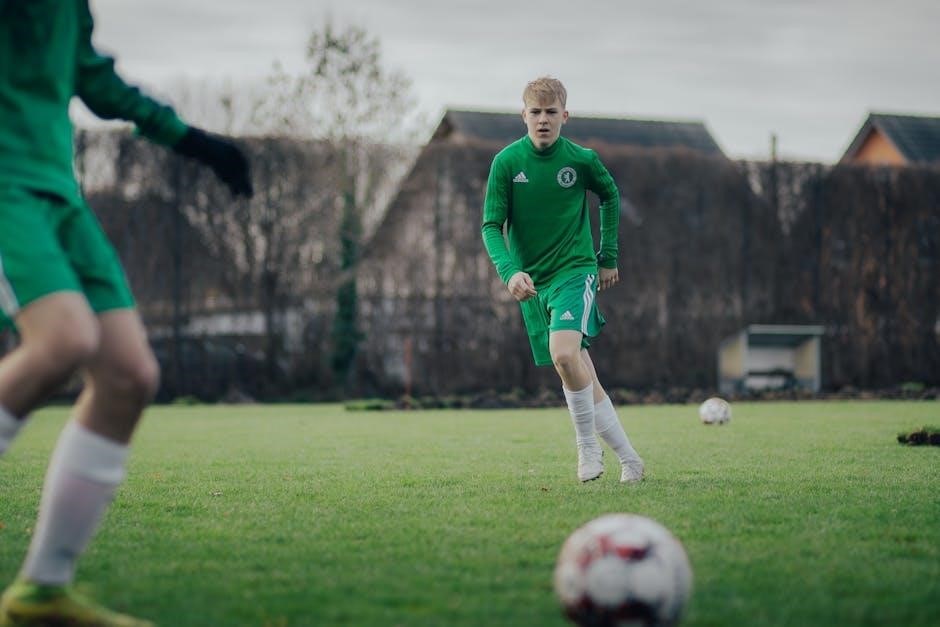
Partner passing is foundational for U8 players. Begin with simple chest passes and progress to inside-of-the-foot passes, emphasizing accuracy and a firm, flat surface on the ball. Focus on non-kicking foot placement alongside the ball and following through towards the target.
Short passing games, like “pass and move,” encourage quick thinking and movement off the ball. Create small grids (5×5 yards) and have players pass to each other while continuously moving to create passing lanes.
Introduce the concept of supporting a teammate and making themselves available for a return pass. Keep it fun and fast-paced, rewarding accurate passes and intelligent movement.
Shooting Drills: Basic Shooting Technique & Target Practice
Introduce the fundamentals of shooting with U8 players. Focus on the planting foot beside the ball, a slight lean over the ball, and a follow-through towards the target. Emphasize striking the ball with the laces for power and accuracy.
Target practice is a great way to build confidence. Use cones, small goals, or designated areas on the field as targets. Start with stationary balls and gradually progress to shooting after a dribble or pass.
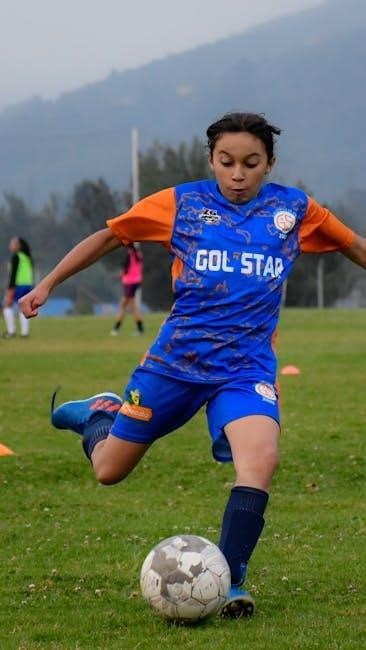
Keep drills fun and encouraging. Celebrate effort and improvement, rather than solely focusing on goals scored. Reinforce the importance of keeping their head over the ball throughout the shooting motion.
Small-Sided Games (20 Minutes)
Transition into dynamic 3v3 or 4v4 scrimmages to apply learned skills in a game-like environment. These smaller games maximize touches and decision-making opportunities for each player. Focus on encouraging space awareness and movement off the ball, rather than complex tactics.
Introduce game variations to enhance learning. Implement “limited touches” (one or two touches per player) to improve ball control under pressure. Experiment with goal restrictions, such as requiring a pass before shooting, to promote teamwork.
Keep the games fast-paced and engaging. Rotate players frequently to ensure everyone gets ample playing time and opportunities to practice. Prioritize fun and participation over winning or losing.
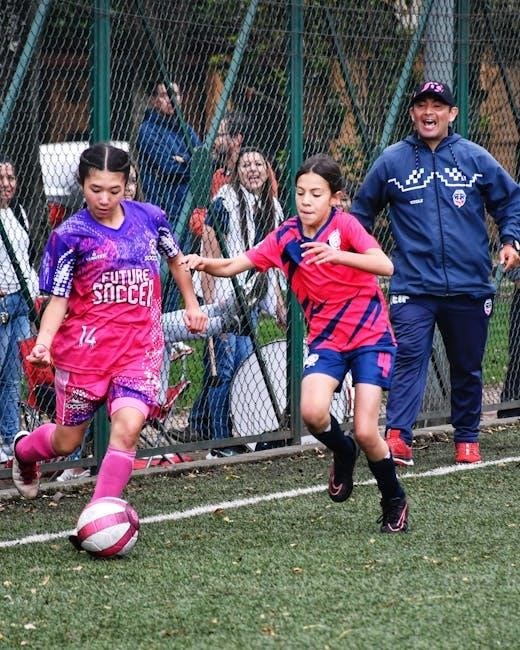
3v3 or 4v4 Scrimmages – Focus on Space & Movement
These small-sided games are ideal for U8 players, fostering quick decision-making and increased ball touches. Emphasize creating passing lanes and supporting teammates. Encourage players to spread out, avoiding clumps, and actively seeking open space.
Coaching points should center on movement off the ball – making runs to receive passes and creating options for the player in possession. Discourage shadowing the ball; instead, promote intelligent positioning.
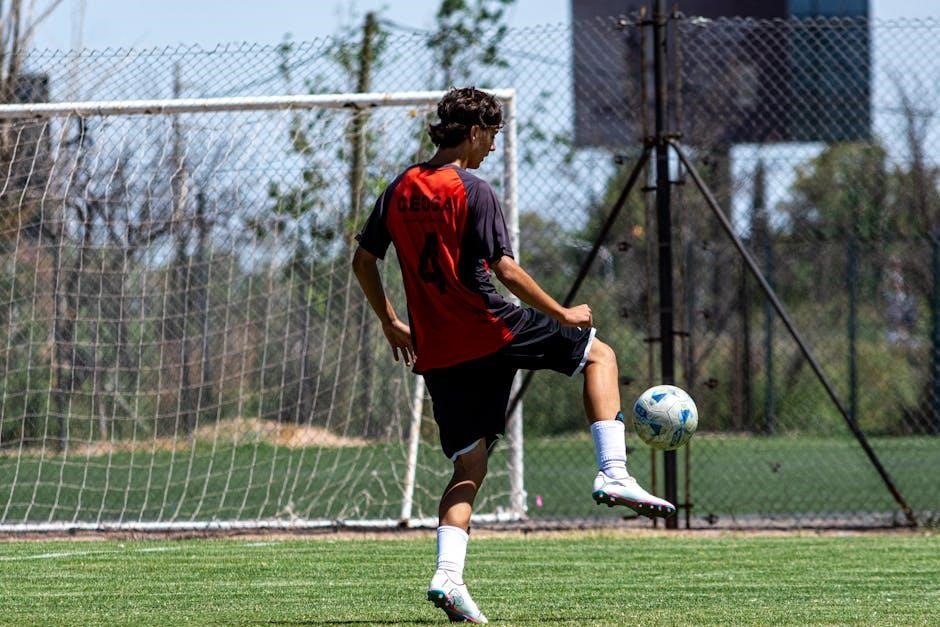
Keep instructions simple and positive. Focus on effort and applying skills learned during drills. Briefly pause play to highlight good examples of spacing and movement, reinforcing positive behaviors.
Game Variations: Limited Touches, Goal Restrictions
Introduce variations to small-sided games to challenge U8 players and refine specific skills. A “two-touch” rule encourages quicker passing and decision-making, forcing players to think ahead. Limiting touches also promotes ball control under pressure and discourages prolonged dribbling.
Goal restrictions, such as requiring a pass before shooting, emphasize teamwork and passing accuracy. Alternatively, designate zones where goals can only be scored from, promoting movement into attacking areas.
These modifications keep games engaging while subtly reinforcing key developmental concepts. Observe how players adapt and provide positive feedback on their efforts to implement the new rules.
Cool-Down & Wrap-Up (5 Minutes)
Conclude each session with a dedicated cool-down period to aid recovery and prevent injuries. Begin with static stretches, holding each for 15-20 seconds, focusing on major muscle groups used during practice – hamstrings, quads, and calves. Encourage deep breathing during stretches to promote relaxation.
This is also an ideal time for positive reinforcement. Highlight specific skills players demonstrated well and offer constructive feedback. Briefly review the key learning objectives of the session, reinforcing the concepts covered.
End on an encouraging note, praising effort and sportsmanship. A quick team cheer can foster a positive team environment and leave players excited for the next practice.
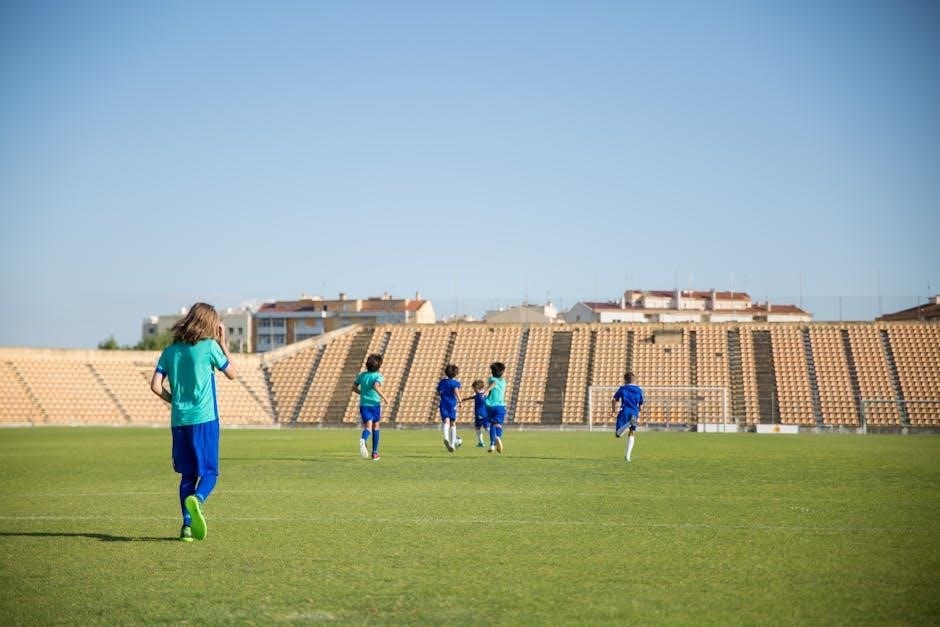
Static Stretching – Holding Stretches for 15-20 Seconds
Introduce static stretches slowly and demonstrate proper form. Focus on key muscle groups like hamstrings (toe touches), quadriceps (heel to butt), and calves (wall stretch). Hold each stretch for 15-20 seconds, ensuring players feel a gentle pull, not pain.
Emphasize the importance of controlled breathing during each stretch. Avoid bouncing, as this can cause injury. Make it fun by naming stretches after animals or incorporating counting.
Supervise closely to correct form and ensure all players participate safely. Explain how stretching helps their bodies recover and prepares them for future activity. A PDF resource with illustrated stretches can be helpful for parents too.
Positive Reinforcement & Review of Skills
End each session with enthusiastic praise! Highlight effort, sportsmanship, and specific improvements observed during practice. Focus on what players did well, rather than mistakes. Acknowledge individual achievements and team collaboration.
Briefly review the key skills practiced – dribbling, passing, or shooting. Ask players what they learned and encourage them to share their experiences. A downloadable PDF checklist can help track skill progression.
Keep the review positive and concise, avoiding lengthy critiques. Reinforce the fun aspect of soccer and encourage continued practice. Send a quick practice summary to parents, highlighting skills covered and areas for home practice.
Essential Equipment for U8 Soccer Practice
A successful U8 practice requires minimal, age-appropriate equipment. Cones are vital for dribbling drills and defining playing areas – a downloadable PDF practice plan often illustrates cone placement. Size 3 soccer balls are crucial for young players’ developing foot skills.
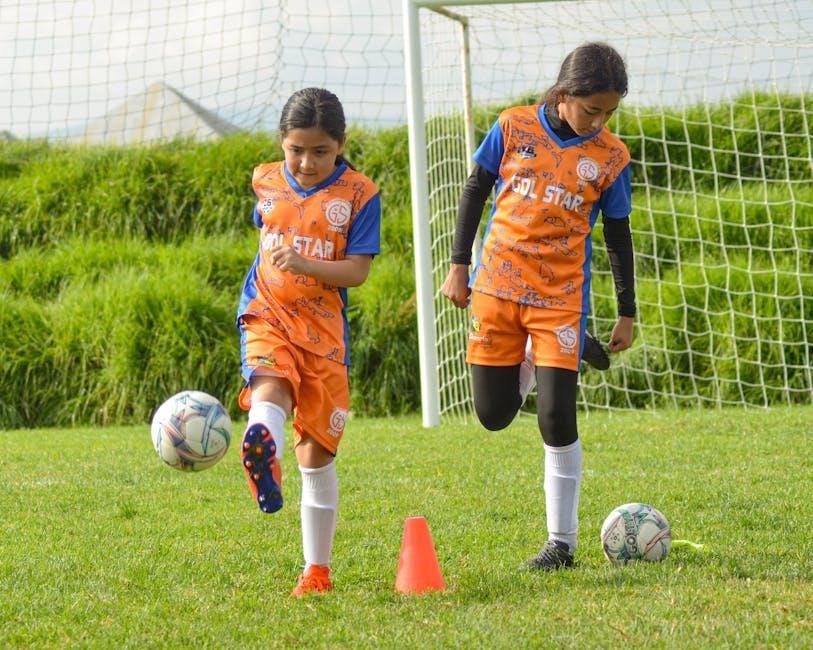
Portable goals (small pop-up goals are ideal) facilitate shooting and small-sided games. A first-aid kit is non-negotiable for minor injuries. Water bottles are essential for hydration, especially during warmer weather. Consider pinnies for differentiating teams during scrimmages.
A whistle helps maintain control and signal transitions. A practice plan PDF can include an equipment checklist for easy preparation. Focus on safety and functionality over expensive gear.
Sample Practice Plan: Dribbling & Passing Focus
This 60-minute plan, often found in a comprehensive U8 soccer practice PDF, prioritizes foundational skills. Begin with a 10-minute warm-up: dynamic stretching and a simple tag game. Dedicate 25 minutes to skill development – cone weaving for dribbling and partner passing with a focus on inside-of-the-foot technique.
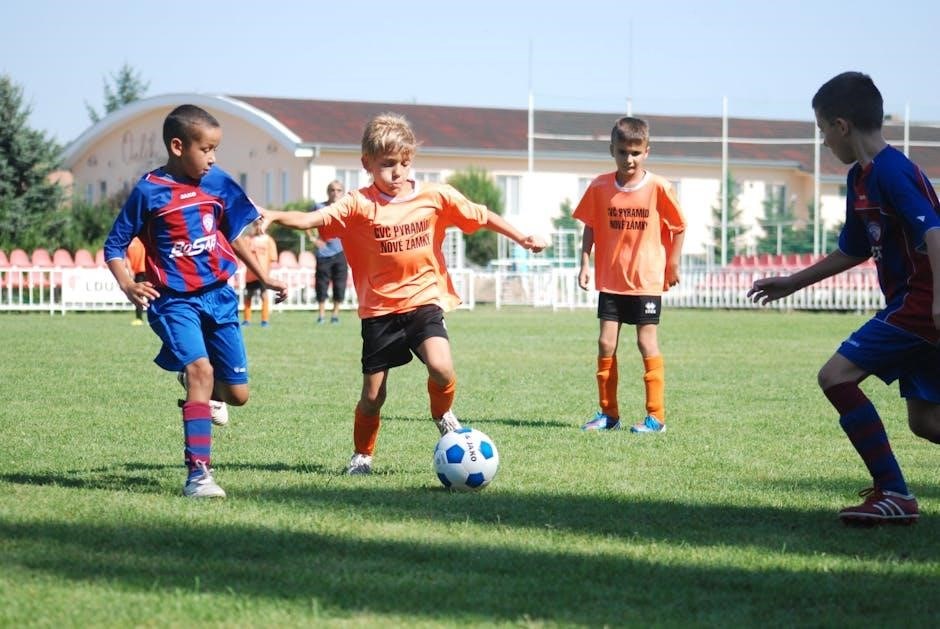
Spend 20 minutes on 3v3 or 4v4 small-sided games, encouraging passing and movement. A PDF plan might suggest limiting touches to enhance ball control. Conclude with a 5-minute cool-down: static stretches and positive reinforcement.
Adapt the plan based on player skill levels, as detailed in many PDF resources. Remember to emphasize fun and participation!
Adapting Plans for Different Skill Levels
U8 soccer practice PDFs often include modifications for varying abilities. For beginners, simplify drills – larger cones for easier dribbling, stationary passing before moving. Increase the challenge for advanced players with smaller spaces, quicker passing sequences, and introducing defensive pressure.
Consider splitting the group based on skill, offering differentiated instruction. A PDF might suggest “challenge” activities for those ready for more complexity. Focus on individual player needs, providing extra support where required.
Remember, the goal is development, not competition. Adapt drills to ensure every child experiences success and enjoys learning, as highlighted in many coaching PDF guides.
Safety Considerations for U8 Soccer Practices
U8 soccer practice PDFs should prioritize player safety above all else. Always begin with a thorough field check for hazards – holes, glass, or other obstructions. Ensure adequate hydration breaks, especially in warm weather, as detailed in many coaching resources.
Proper warm-up and cool-down routines are crucial to prevent injuries. PDF guides often emphasize age-appropriate stretching. Supervise drills closely, intervening to correct unsafe techniques. First-aid knowledge is essential for any coach.
Be mindful of weather conditions and adjust practices accordingly. A well-prepared PDF plan will include contingency options for inclement weather, ensuring a safe environment for young players.
Resources for U8 Soccer Coaches (PDF Downloads)
Numerous online platforms offer valuable U8 soccer practice plans in PDF format. Websites dedicated to youth soccer coaching frequently provide downloadable drills, session outlines, and skill progression guides. These PDF resources often categorize content by skill focus – dribbling, passing, shooting – simplifying practice planning.
Organizations like US Youth Soccer and state soccer associations offer comprehensive coaching materials, including PDFs tailored for the U8 age group. Look for resources detailing age-appropriate activities and safety guidelines. Many PDFs include diagrams illustrating drill setups and coaching points.
Exploring online coaching communities can also yield access to shared PDF practice plans and valuable insights from experienced coaches.
Common Mistakes to Avoid in U8 Coaching
Overly complex drills, often found in poorly designed PDF practice plans, can overwhelm young players. Keep activities simple and focus on fundamental skill development. Avoid lengthy explanations; demonstrate instead. Another common error is neglecting fun! U8 players thrive on engaging, game-like activities, not repetitive drills.
Don’t fall into the trap of constant correction. Positive reinforcement is crucial at this age. Resist the urge to over-coach; allow players to explore and learn through play. Beware of PDF plans that prioritize winning over development.
Finally, failing to adapt plans based on player skill levels is a significant mistake. Flexibility is key!